Hound Tor
Home of the Hound of the Baskervilles
Anyone who has read Sir Arthur Conan Doyle's novel The Hound of the Baskervilles should feel a pleasurable shiver down their spine at the notion of a visit to Hound Tor. Similarly, anyone who has read or heard the local stories of ghost dogs, hell hounds and assorted canine apparitions should find their hair standing just a little bit on end.
Hound Tor and its tales were one of the inspirations for Conan Doyle, who brought his famous detective hero Sherlock Holmes to Devon to solve the mystery of a man supposedly killed by a ghostly, ferocious hound. Holmes' rational approach soon proved that the murder was far from supernatural, and... well, you will need to read the book to find out the rest.
Conan Doyle was given the idea for the story by a Devonian friend, who brought him to see Hound Tor and tour Dartmoor more widely in 1901. He knew some of the stories of haunted Dartmoor, in particular that of the local 17th century squire Sir Richard Cabell, who is buried in Buckfastleigh Church, south of the moor. Cabell was a frightening figure, known for his passion for hunting and widely believed to have murdered his wife and made a pact with the devil.
His story became mixed up with one that is quite common across Britain, the notion of a pack of ghostly or hellish hounds which come sweeping across moors and lonely places at night with a demonic huntsman. This 'Wild Hunt' snatches up anyone in its path and even to see it is extremely unlucky.
On a misty day, Hound Tor can feel wonderfully haunted. Only part of this is to do with Conan Doyle, however. More concrete and visible are the remains of a medieval village on the slopes of the tor, whose last inhabitants left or died during the early 15th century.
The building foundations and low grey walls that survive are of 13th century farmsteads, and the people who lived in this lonely place made a success of farming for at least two centuries there. But plague and climate change, which made the moor colder and wetter in the late Middle Ages, are thought to have put an end to their settlement, along with a number of others across Britain's uplands.
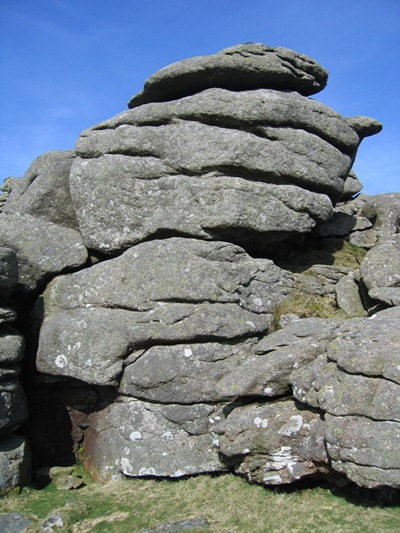
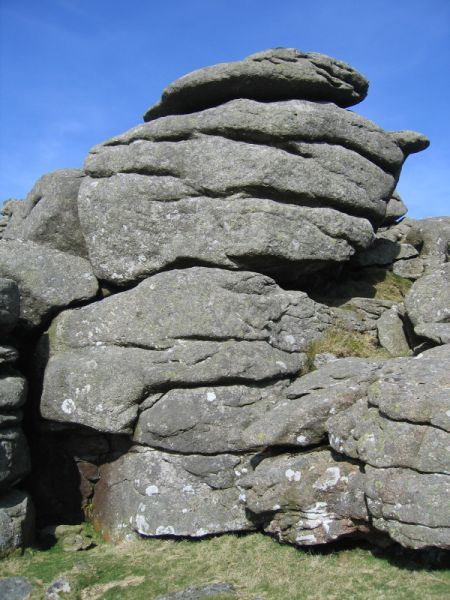 Craggy rocks at Hound Tor
 © essentially-england.com
The Complete Sherlock Holmes Collection

Hound Tor Deserted Village
This village can be reached by a half mile walk from the car park. If you park at Jay's Grave, pause to see the always fresh (and so far unexplained) flowers on the grave of the 19th century suicide Kitty Jay.
The tor itself is a spectacular pile of granite towers, one of the most castle-like of Dartmoor's tors, which is saying quite a lot! In the autumn and winter its slopes are red with bracken, which dies back in the colder months and makes a perfect contrast to the grey rocks.
In spring and summer you will find wildflowers among the grass and green ferns, and there is particularly spectacular bluebell field at Holwell Lawn for a few days every spring. You have to be just at the right time to catch that sight, though.
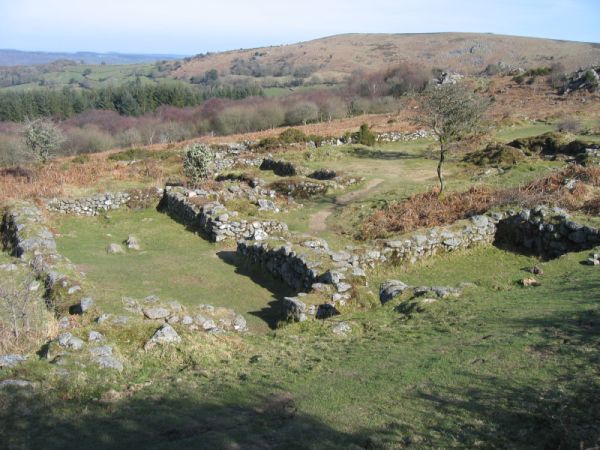 Remains of the Deserted Medieval Village on Hound Tor © essentially-england.com
For more information on Hound Tor deserted village please read the English Heritage webpage.
Are You Planning a Visit to Dartmoor?
Where You Could Stay
This is such a beautiful part of Devon - with the sea on one side and little villages nestling in green valleys on the other - that many people come for their holidays, often year after year. A good way to explore the area at your leisure is by renting a holiday cottage in Devon.
And here are a few examples of where you could be staying:
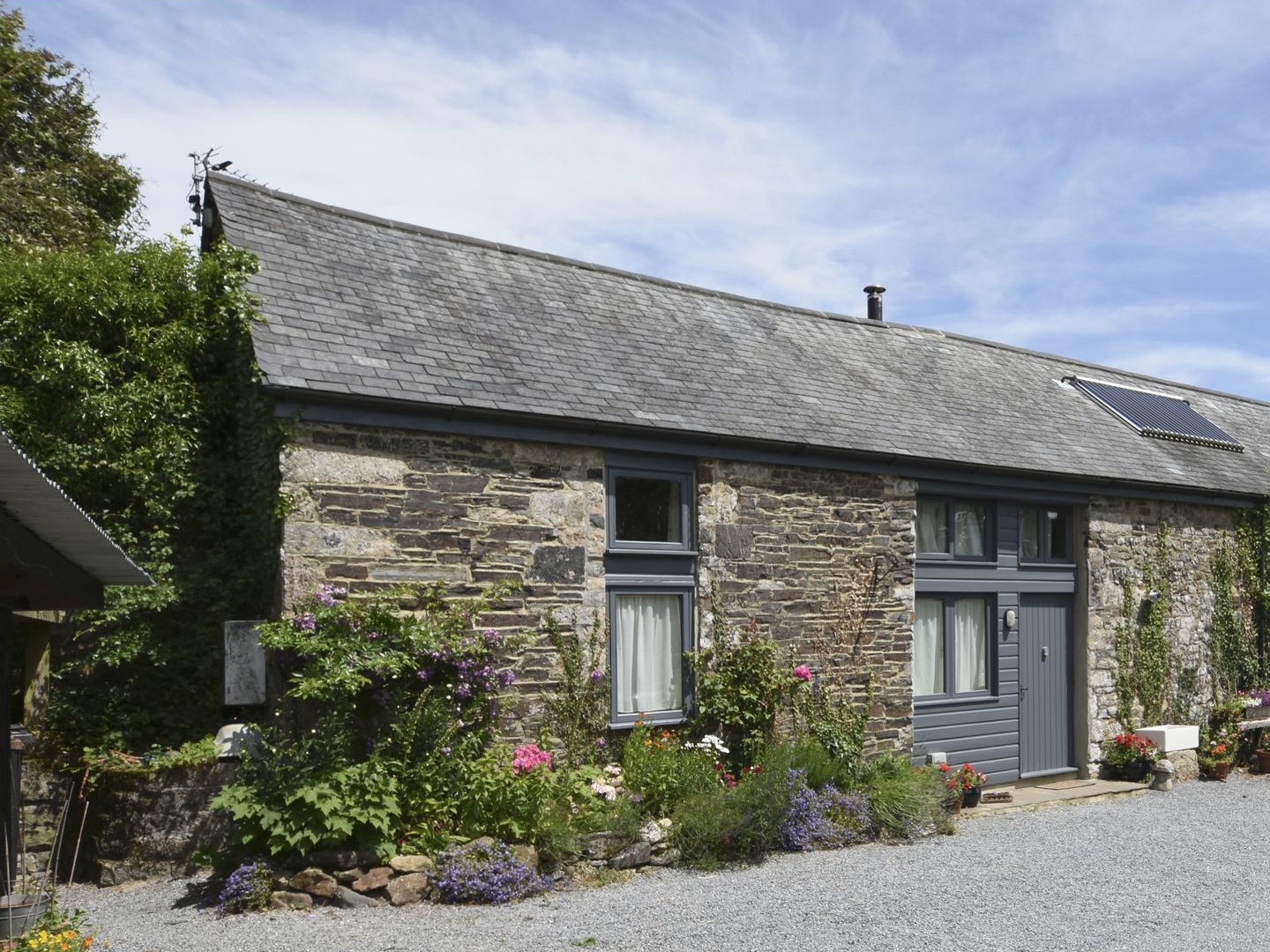
.JPG "Holiday Cottages in Devon: Widecombe Longhouse, Widecomb-in-the-Moor | holidaycottages.co.uk")

To see other holiday cottages in Dartmoor click here. Or check out holiday cottages in other parts of England by clicking here.
Or you could try a family-orientated holiday resort in Devon. There's plenty of choice...
If you need to find a hotel, then try one of these search platforms...
What You Could See and Do
Dartmouth and the South Devon coast are a paradise for sailors of all ages and abilities. So if messing around in boats on the water is your kind of holiday, then you're in just the right place.
But with the coastal path on one side and the Devon countryside on the other, this area is also great for walking. Besides Slapton Sands and its beautiful nature reserve there are villages, hillsides, cliffs and beaches to explore. And just a short drive will take you up to the wilds of Dartmoor, to rocks and endless skies and tales of smugglers and giant hounds.
Why not check out
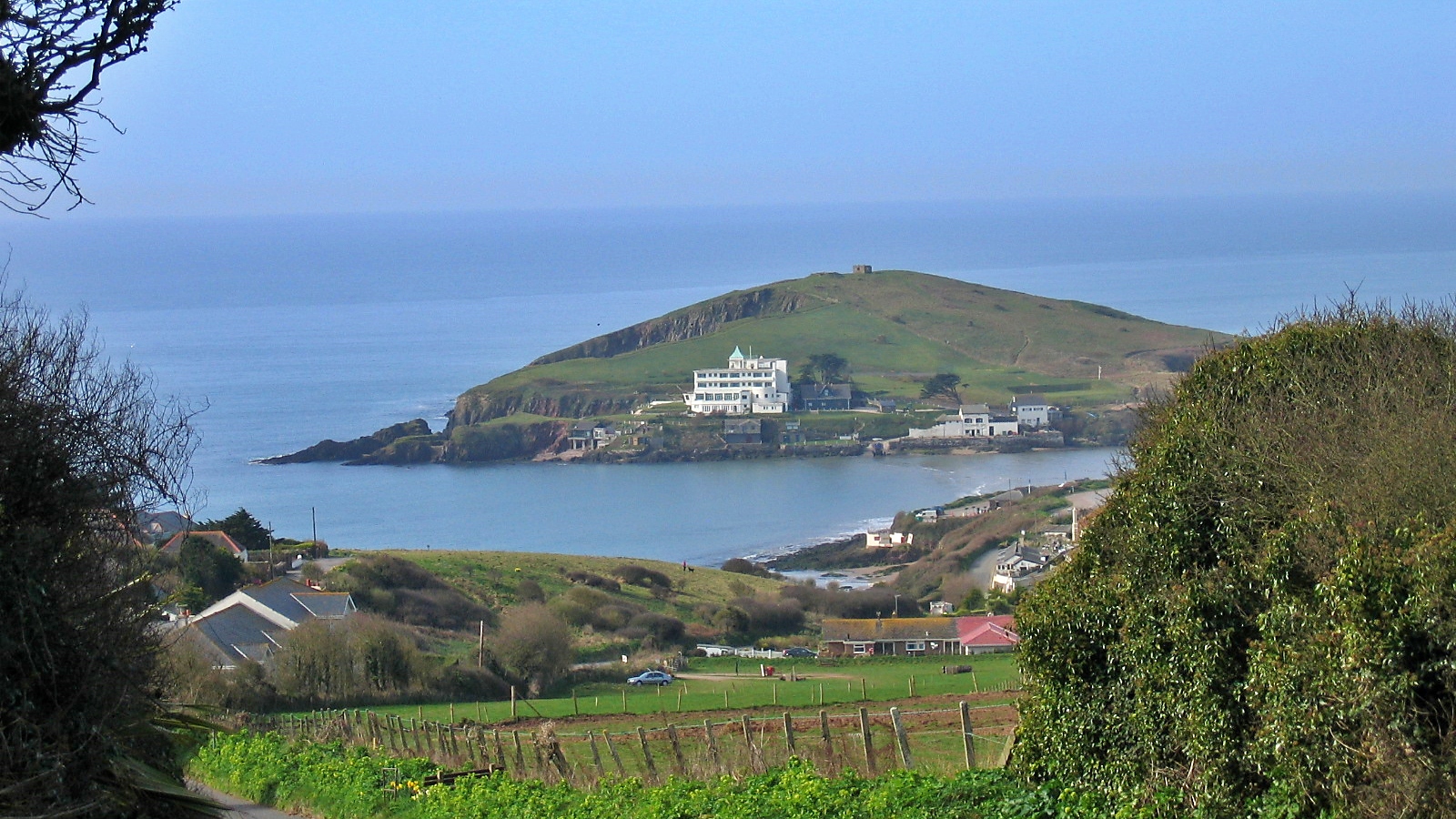
- Burgh Island
- Dartmoor Ponies
- Brentor
- Lyford Castle and Gorge
- Slapton Sands
- Agatha Christie's Greenway
- The Golden Hind
- Grimspound
- Merrivale
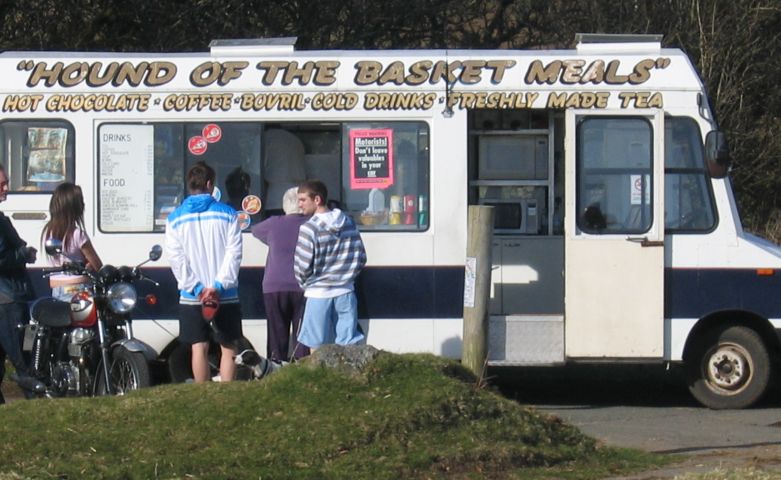 Refreshments at Hound Tor © essentially-england.com
Return to the Devon page for more holiday inspiration.
Affiliate Disclosure: Essentially England uses affiliate links. This means that if you purchase something through a link on this site, we may earn a commission (at no extra cost to you).
Welcome to
Essentially England!
We're Steve & Sue, passionate about majestic castles, gorgeous stately homes, cosy pubs, and glorious roasts. Let us help you plan your perfect holiday, a brilliant day out, or simply transport you with a taste of tradition and a dash of history.