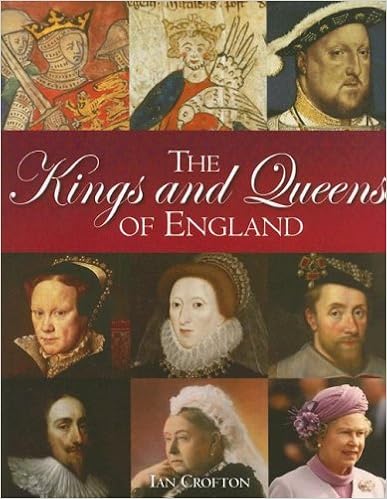
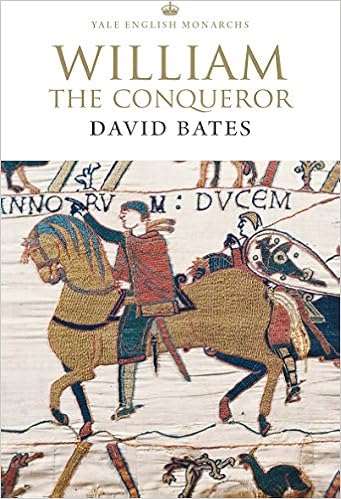
English Monarchs
Rulers Throughout England's History
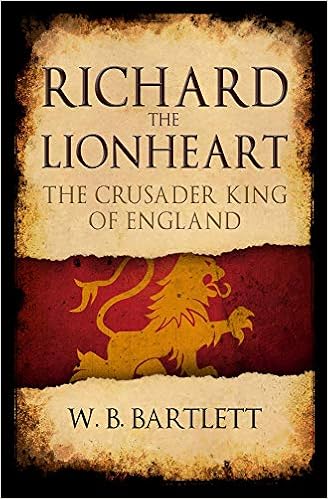
It was that hero among English monarchs, Richard the Lionheart, who sparked my interest in English history when I was barely six years old.
The gallant crusader king, much romanticised in numerous versions of the tales of Robin Hood and by Sir Walter Scott in Ivanhoe and The Talisman, was a figure sure to stir the heart of a little girl.
For a very long time, I devoured everything I could find about Norman England, the Norman conquest and the Plantagenets in particular.
Later, my interest turned to the Wars of the Roses and the ill-fated House of York.
And with the perversity typical of teenagers, I carried a torch for the much-maligned Richard III, who died gallantly on the battlefield after coming close to defeating Henry Tudor and whose crown was (allegedly) found hanging on a thorn bush.
But the two Richards are not the only English monarchs with interesting stories attached to their names. Kingship in England stretches back over 1500 years into the dark ages after the Romans left these shores.
The line of English kings is not an unbroken one - invasions, murders and a high child mortality having seen to that - but it is nevertheless fascinating.
From a time when the strongest (and not just in the physical sense) contender to the throne was elected by his peers in the hope that he would be able to defend the country against its enemies, through a time when people believed in the god-given, hereditary right of kingship, to the time when an English king died on the scaffold, there is no historical period when English monarchs were not living their lives centre stage.
So here are stories of the English monarchs - those we know about, and those we wish we'd had. Welcome to a fascinating journey!
The Mythical Kings of England
Kingship in England developed in the centuries after the Romans left these shores, but written evidence of that time is sparse, and legends abound. In this section, you can read about some of them, including the famous Saxon warriors Hengest and Horsa, Uthred and - of course - the most famous of all mythical English monarchs: King Arthur.
The Anglo-Saxon Kings of England
Out of the dark years after the Roman occupation rose seven English kingdoms. Over time, they merged into one: England. This section explores the history of the kings ruling England's Anglo-Saxon past.
The Norman Kings of England 1066 - 1154
The Norman invasion changed life in England like few events before and since. Most people have heard of the Battle of Hastings, know the meaning of the year 1066 and know who William the Conqueror was. But do you know the English monarchs who followed him?
The Plantagenet Kings of England 1154 - 1485
Three hundred years is a long time for the descendants of one house to be ruling, but the Plantagenets managed it and lived through crusades, the 100-year War, the Plague, barons' and peasants' rebellions and inter-familiar strife until the Wars of the Roses ended their dominion.
The Tudor Kings of England 1485 - 1603
The Tudor period was a time of great discoveries, of change and dissent. Some of the best known English monarchs, Henry VIII and Elizabeth I belong into this period, as do pirates, religious martyrs, globe-trotting merchants and the Spanish Armada.
The Stuart Kings of England 1603 - 1714
Following the successful Tudor dynasty onto the throne of England cannot have been easy. From an English king dying on the scaffold, to a vicious civil war, the restoration of the monarchy, the Black Death and the Great Fire of London the Stuart period was turbulent - and that's putting it mildly.
The Hanoverian Kings of England 1714 - 1917
The Hanoverians, invited to rule England to prevent another Jacobite uprising, proved to be a blessing. They presided over the Industrial Revolution and expansion that turned Britain into a global power. Two of the longest-ruling English monarchs, King George III and Queen Victoria, belong into this period.
The Monarchs England Never Had
England boasts a very long line of rulers. But there are also those contenders that never made it onto the throne. England never had a King Eustace, a King Robert or (arguably) a King Arthur. Some of the royal wannabes died young, while some were beaten to the finish line. But all of them can be classified as the monarchs that England never had.
England's Shortest-Reigning Monarchs
Which English monarchs spent the shortest time on the throne? Not all of them were killed on the battlefield - and one English king didn't die at all.
England's Longest-Serving Monarchs
Jane Grey managed nine days as England's queen. Queen Elizabeth II ruled for 70 years and 214 days. Every other English and British monarch fits in between. So, who were the ones coming closest to Queen Elizabeth II in the years spent on the throne? Read on to find out.
Affiliate Disclosure: Essentially England uses affiliate links. This means that if you purchase something through a link on this site, we may earn a commission (at no extra cost to you).
Welcome to
Essentially England!
We're Steve & Sue, passionate about majestic castles, gorgeous stately homes, cosy pubs, and glorious roasts. Let us help you plan your perfect holiday, a brilliant day out, or simply transport you with a taste of tradition and a dash of history.